
Introduction: What Is a Frozen Meat Slicer?
If you run a central kitchen, hotel, school cafeteria, or meat processing plant, you know the challenge: slicing frozen meat evenly, quickly, and without waste. Enter the frozen meat slicer — also known as a chop cutter.
This industrial-grade machine is not your average deli slicer. It is designed for high-demand, high-precision cutting of frozen ingredients. Whether you need thin slices of bacon, uniform cubes of cheese, or portioned cuts of bone-in frozen meat, a frozen meat slicer delivers consistent results.
Also known as: Chop cutter, frozen block slicer, or frozen meat chopper.
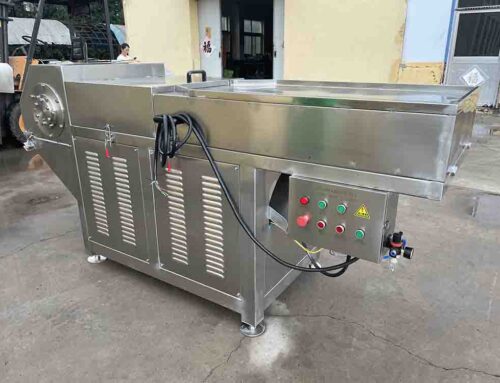
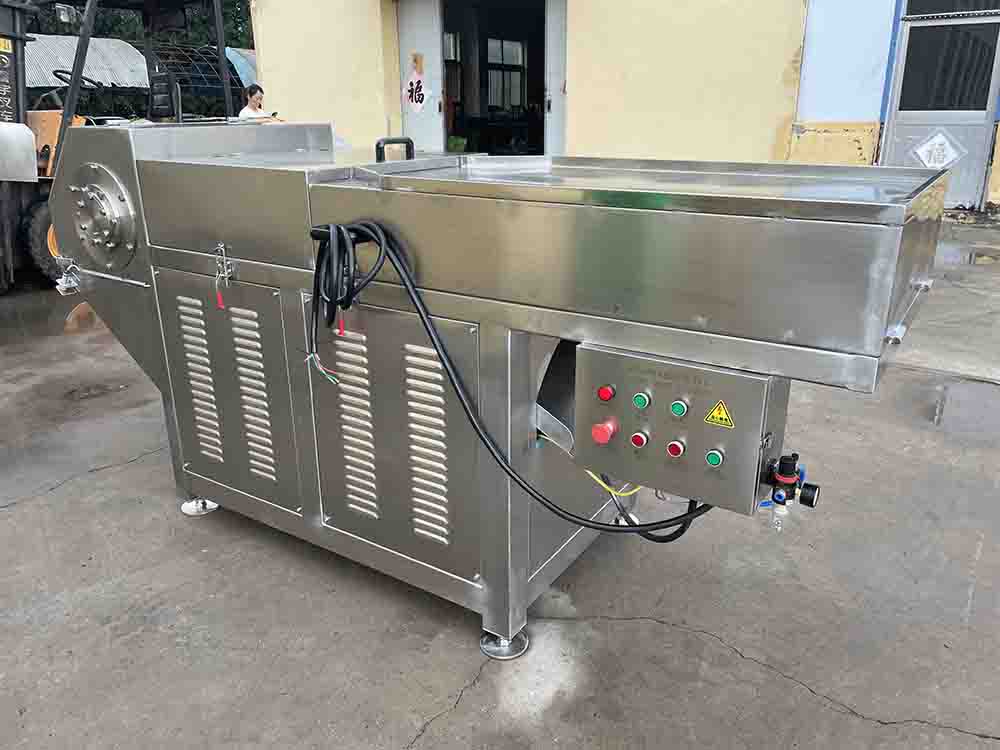
Conveyor chop cutter
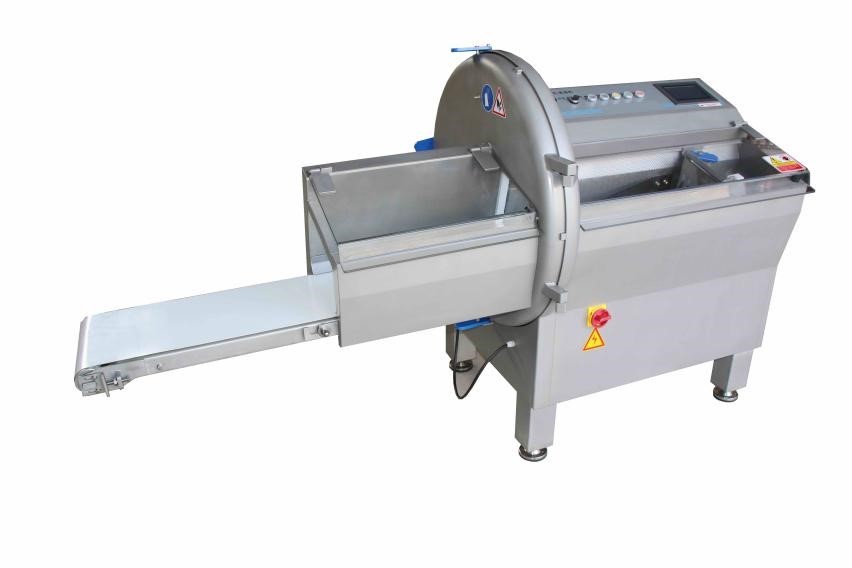
Why Choose a Frozen Meat Slicer (Chop Cutter)?
The frozen meat slicer is built for efficiency and accuracy. Unlike standard slicers that struggle with frozen or semi-frozen products, this machine powers through:
Frozen meat (beef, pork, lamb, poultry)
Frozen fish blocks
Hard cheese (aged or frozen)
Bacon and sausages
Bone-in frozen meat (when equipped with a serrated blade)
Key Benefits
| Feature | Advantage |
|---|---|
| High precision | ±1mm accuracy for uniform slices |
| High efficiency | Cuts hundreds of kg per hour |
| Versatile blades | Switch between smooth and serrated blades |
| Frozen capability | Cuts products at -10°C to -4°C |
| Low waste | Reduces edge trim and broken pieces |
How Does a Frozen Meat Slicer Work?
The machine operates on a simple but robust principle:
Product loading – A frozen block is placed on the feeding carriage.
Clamping – The product is secured to prevent movement.
Slicing action – A reciprocating blade cuts the block from top to bottom or front to back (depending on model).
Portion control – The slice thickness is set digitally (e.g., 2mm to 30mm).
Output – Perfect slices fall onto a conveyor or collection tray.
Pro tip: For bone-in frozen meat, replace the standard blade with a serrated blade. This allows clean cutting through bones without chipping.
Applications: Who Needs a Chop Cutter?
The frozen meat slicer is essential for any business that handles bulk frozen ingredients. Typical users include:
Food service distributors – Portioning frozen meat for restaurants.
Hotels & resorts – Buffet preparation (bacon, ham, cheese).
Schools & universities – High-volume, consistent slices for meals.
Central kitchens – Prepping ingredients for satellite locations.
Meat processing plants – Slicing frozen blocks for further processing.
Industrial bakeries – Cutting frozen cheese or meat toppings.
Frozen Meat Slicer vs. Standard Deli Slicer: What’s the Difference?
| Feature | Frozen Meat Slicer (Chop Cutter) | Standard Deli Slicer |
|---|---|---|
| Frozen product capability | Yes (-10°C) | No (needs thawing) |
| Blade type | Reciprocating (smooth or serrated) | Rotating circular blade |
| Bone cutting | Yes (with serrated blade) | No |
| Speed | Up to 300 slices/minute | ~40 slices/minute |
| Typical use | Industrial, central kitchen | Deli, retail, small restaurant |
Bottom line: If you frequently slice frozen blocks or bone-in products, a deli slicer will fail. You need a dedicated frozen meat slicer.
Types of Blades for Your Chop Cutter
Choosing the right blade is critical for performance.
Smooth blade – For boneless frozen meat, fish, cheese, and bacon. Produces clean, non-serrated edges.
Serrated (saw-tooth) blade – For frozen meat with small bones (e.g., ribs, T-bones, lamb chops). Cuts through bone without breaking.
Double-cut blade – For extremely hard frozen products (rare).
Tip: Always keep spare blades on hand. A dull blade will tear frozen meat instead of slicing it cleanly.
How to Choose the Right Frozen Meat Slicer for Your Business
Before buying a chop cutter, ask these 5 questions:
What products will you cut? (boneless, bone-in, cheese, fish)
What is your daily volume? (100 kg vs 2000 kg)
What slice thickness range? (1mm prosciutto or 30mm stew cubes)
What is your frozen block size? (600mm x 400mm is standard)
Do you need conveyor discharge? (for automatic stacking)
Recommended Specifications
Motor power: 2–5 kW (depends on product hardness)
Blade speed: Adjustable (200–300 cuts/min)
Slice thickness: Digital control, 0.5–40 mm
Safety features: Dual push-button operation, emergency stop
Maintenance Tips for Long Service Life
A frozen meat slicer is an investment. Keep it running for 10+ years with these tips:
Clean after each shift – Remove meat residue to prevent bacterial growth.
Lubricate moving parts – Follow manufacturer guidelines.
Sharpen or replace blades – Dull blades strain the motor.
Check belt tension – Every 3 months.
Train operators – Improper use is the #1 cause of breakdowns.
Top 5 Benefits of Using a Chop Cutter in Your Kitchen
Consistency – Every slice looks identical. Great for portion control and presentation.
Speed – Slice 500 kg of frozen meat per hour with a single operator.
Versatility – Change the blade in minutes to switch from bacon to bone-in lamb.
Reduced labor – One person does the work of three with a manual slicer.
Less thawing – Slice directly from frozen. No need to thaw and refreeze.
Frequently Asked Questions (FAQ)
Q1: Can a frozen meat slicer cut through bone?
A: Yes – but only if you install a serrated blade. A smooth blade will chip or break.
Q2: What is the minimum slice thickness?
A: Most industrial models go down to 0.5mm (ideal for prosciutto or smoked salmon).
Q3: Do I need to thaw frozen meat before slicing?
A: No. The machine is designed to slice fully frozen products (down to -10°C).
Q4: Is a chop cutter safe to use?
A: Yes, modern machines have dual-hand operation, blade guards, and emergency stops. Always follow safety training.
Q5: What’s the difference between a frozen meat slicer and a frozen block flaker?
A: A flaker produces small flakes or granules. A slicer produces whole, uniform slices.
Conclusion: Upgrade Your Meat Processing with a Frozen Meat Slicer
If you are still thawing frozen meat and using a standard deli slicer – or worse, cutting by hand – you are losing time, money, and consistency. A frozen meat slicer (chop cutter) is the professional solution for high-volume, high-precision slicing of frozen meat, fish, cheese, bacon, and even bone-in products.
From central kitchens to meat processing factories, this machine delivers ROI through reduced labor, less waste, and perfect portion control.
👉 Ready to buy? Contact our experts to find the right chop cutter for your production volume. Ask about our serrated blade options for bone-in frozen meat.
Outbound Resource
For food safety guidelines on frozen meat processing, visit the USDA FSIS official page.
Target Keywords:
frozen meat slicer, chop cutter, frozen meat slicer machine, meat slicing equipment, frozen block slicer, bone-in frozen meat slicer, central kitchen equipment, industrial meat slicer.
Leave A Comment